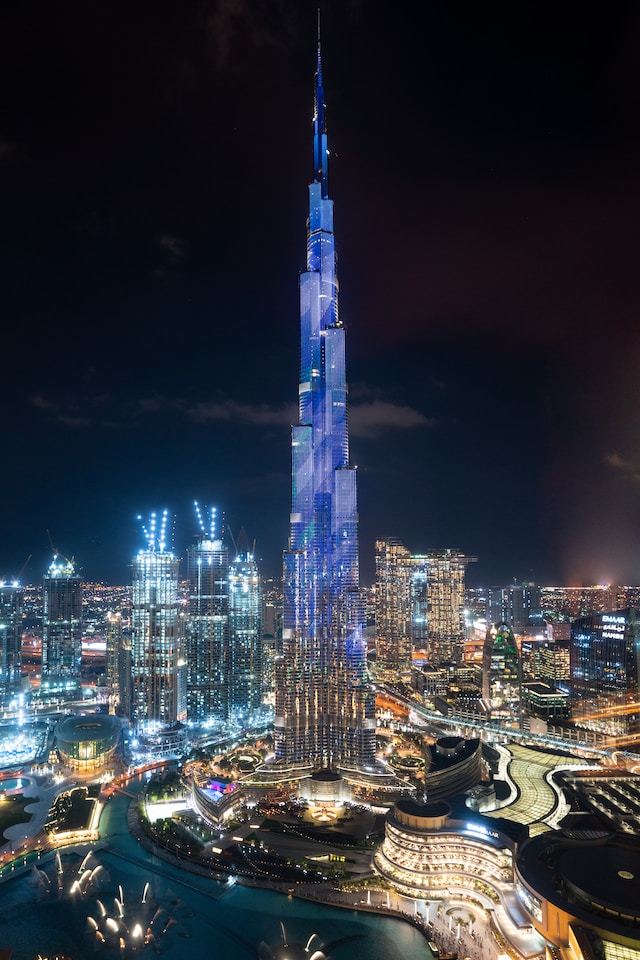
Burj Khalifa: Touching the Sky with Architectural Grandeur
Over the last two decades, the field of architecture and structural engineering has witnessed a remarkable ascent, giving rise to towering skyscrapers that now grace the skylines of major global cities. Yet, claiming the title of the world's tallest building elevates a structure to an unparalleled status.

Over the last two decades, the field of architecture and structural engineering has witnessed a remarkable ascent, giving rise to towering skyscrapers that now grace the skylines of major global cities. Yet, claiming the title of the world's tallest building elevates a structure to an unparalleled status. 

In March 1996, the Petronas Towers in Kuala Lumpur, Malaysia, surpassed the Sears Tower's record as the world's tallest office building. With stainless steel pinnacles adorning the 88-storey towers, their height reached an impressive 451.9 meters (1,482 feet 8 inches). However, in 2003, Taiwan's Taipei 101, soaring at an immense 508 meters (1,666 feet), seized the title. Just a year later, the construction of Burj Khalifa commenced.

Part of the groundbreaking Downtown Dubai development, this architectural marvel was envisioned near Dubai's main business district in the UAE, covering a vast 2 square kilometers (490 acres). Developed by Emaar Properties and designed by the renowned Skidmore, Owings & Merrill LLP, led by the esteemed American architect Adrian Smith, Burj Khalifa emerged as an iconic symbol of the modern world, stretching a breathtaking 828 meters (2,716 feet 6 inches) into the sky.

Design and Construction: A Monumental Undertaking
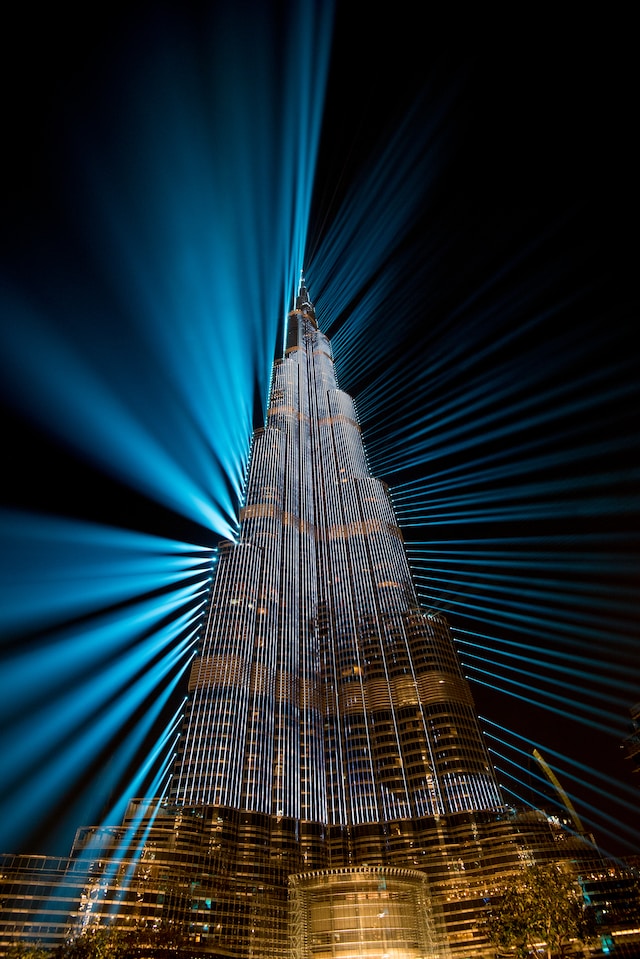
Ahmed Al Falasi, Executive Director of Burj Khalifa, expressed the challenge faced during the tower's conception: "We're born with a challenge. A challenge to prove to ourselves first, and to the world, 'Yes, we can.'" Originally intended to stand at 518 meters tall, the Burj's design expanded by a staggering 310 meters, equivalent to the height of the Eiffel Tower.

Construction initiated on September 21, 2004, with the exterior completed on October 1, 2009. The neo-Futurist-style Burj Khalifa, designed with a complex Y-shaped cross-section, aimed to mitigate the impact of wind on such a towering structure. The construction involved over 12,000 people worldwide, with 26,000 hand-cut glass panels used in the exterior cladding. The building, featuring residential, office, and hotel spaces, takes three months to be cleaned from top to bottom.

A Towering Achievement: Records and Recognition
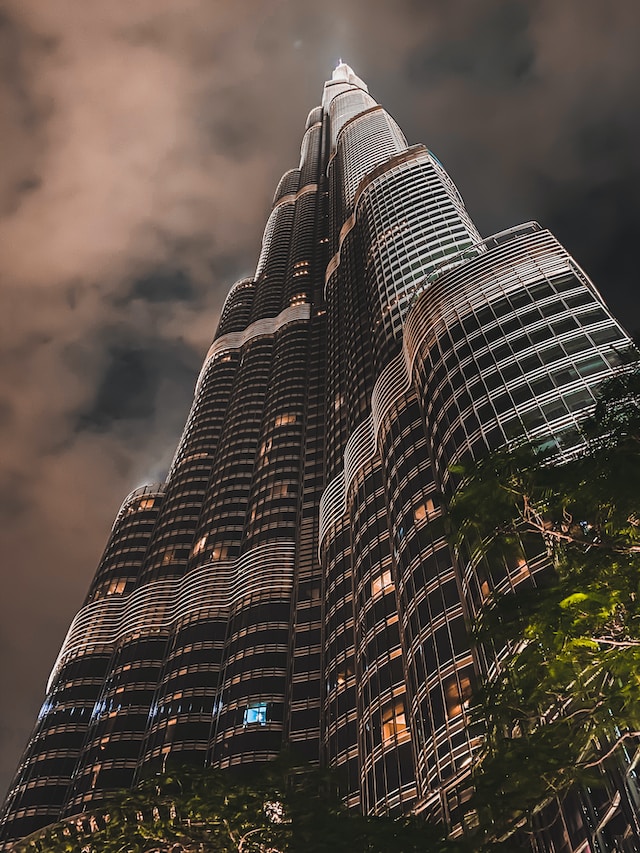
Burj Khalifa officially opened on January 4, 2010, securing certification as the world's tallest building. Talal Omar, Country Manager of UAE, Guinness World Records, hailed its unique design, marking its impressive stature. Surpassing the Empire State Building's height twice over and towering nearly three times higher than the Eiffel Tower, the Burj set several records ratified by Guinness World Records.

Among its achievements are the Tallest elevator in a building (504 meters; 1,654 feet), the Most floors in a building (163), and the Highest restaurant from ground level (441.3 meters; 1,447 feet 10 inches). The observation deck, standing at 555.7 meters (1,823 feet 1.9 inches), was once the world's highest until China's Shanghai Tower surpassed it in 2015.

Notably, on New Year's Eve 2015, the Burj Khalifa hosted a spectacular fireworks display, setting a record for the Highest fireworks on a building. Additionally, it witnessed other record attempts, including the Highest BASE jump from a building and the Fastest time to climb the Burj Khalifa by bicycle (2 hours, 20 minutes, and 38 seconds). Burj Khalifa stands not only as a structural triumph but also as a testament to human innovation and determination.

Trending Now
|
Burj Khalifa: Touching the Sky with Architectural Grandeur
Over the last two decades, the field of architecture and structural engineering has witnessed a remarkable ascent, giving rise to towering skyscrapers that now grace the skylines of major global cities. Yet, claiming the title of the world's tallest building elevates a structure to an unparalleled status.

Over the last two decades, the field of architecture and structural engineering has witnessed a remarkable ascent, giving rise to towering skyscrapers that now grace the skylines of major global cities. Yet, claiming the title of the world's tallest building elevates a structure to an unparalleled status. 

In March 1996, the Petronas Towers in Kuala Lumpur, Malaysia, surpassed the Sears Tower's record as the world's tallest office building. With stainless steel pinnacles adorning the 88-storey towers, their height reached an impressive 451.9 meters (1,482 feet 8 inches). However, in 2003, Taiwan's Taipei 101, soaring at an immense 508 meters (1,666 feet), seized the title. Just a year later, the construction of Burj Khalifa commenced.

Part of the groundbreaking Downtown Dubai development, this architectural marvel was envisioned near Dubai's main business district in the UAE, covering a vast 2 square kilometers (490 acres). Developed by Emaar Properties and designed by the renowned Skidmore, Owings & Merrill LLP, led by the esteemed American architect Adrian Smith, Burj Khalifa emerged as an iconic symbol of the modern world, stretching a breathtaking 828 meters (2,716 feet 6 inches) into the sky.

Design and Construction: A Monumental Undertaking

Ahmed Al Falasi, Executive Director of Burj Khalifa, expressed the challenge faced during the tower's conception: "We're born with a challenge. A challenge to prove to ourselves first, and to the world, 'Yes, we can.'" Originally intended to stand at 518 meters tall, the Burj's design expanded by a staggering 310 meters, equivalent to the height of the Eiffel Tower.

Construction initiated on September 21, 2004, with the exterior completed on October 1, 2009. The neo-Futurist-style Burj Khalifa, designed with a complex Y-shaped cross-section, aimed to mitigate the impact of wind on such a towering structure. The construction involved over 12,000 people worldwide, with 26,000 hand-cut glass panels used in the exterior cladding. The building, featuring residential, office, and hotel spaces, takes three months to be cleaned from top to bottom.

A Towering Achievement: Records and Recognition

Burj Khalifa officially opened on January 4, 2010, securing certification as the world's tallest building. Talal Omar, Country Manager of UAE, Guinness World Records, hailed its unique design, marking its impressive stature. Surpassing the Empire State Building's height twice over and towering nearly three times higher than the Eiffel Tower, the Burj set several records ratified by Guinness World Records.

Among its achievements are the Tallest elevator in a building (504 meters; 1,654 feet), the Most floors in a building (163), and the Highest restaurant from ground level (441.3 meters; 1,447 feet 10 inches). The observation deck, standing at 555.7 meters (1,823 feet 1.9 inches), was once the world's highest until China's Shanghai Tower surpassed it in 2015.

Notably, on New Year's Eve 2015, the Burj Khalifa hosted a spectacular fireworks display, setting a record for the Highest fireworks on a building. Additionally, it witnessed other record attempts, including the Highest BASE jump from a building and the Fastest time to climb the Burj Khalifa by bicycle (2 hours, 20 minutes, and 38 seconds). Burj Khalifa stands not only as a structural triumph but also as a testament to human innovation and determination.

Trending Now