The Art of Italian Pasta Making
Explore dough's artistry—pasta, noodles, pancakes, and dumplings craft a delicious masterpiece.

In the realm of culinary delights, pasta, once considered a humble dish, has often been overlooked in favor of more sophisticated fare. However, it's time to delve into the world of pasta, exploring the nuances of dough preparation, distinguishing between fresh and dry varieties, unraveling optimal cooking times, and understanding the water-to-pasta ratio for that perfect texture. Let's commence with a fresh pasta recipe.

Ingredients:

Instructions:

  1. Combine all ingredients in a mixing bowl using a flat beater until a smooth, uniform dough is obtained. If kneading on a flat surface, create a well in a flour mound, pour egg yolks into it, and knead circularly until a uniform dough forms. Adjust with additional flour if the dough is too sticky.
  2. Wrap the dough in plastic wrap and let it rest for at least 30 minutes at room temperature.
  3. Divide the dough into four portions, rolling each to a 3-millimeter thickness using a pasta machine or rolling pin.
  4. Shape the dough and cook in boiling water for 2-3 minutes.
  5. Repeat the process with remaining dough portions.
  6. Serve with your preferred sauce.

Now, a brief exploration into the scientific aspects of pasta:

Noodles made their debut over 4,000 years ago in China, finding their way into the culinary landscapes of Asia and Europe. While China and Italy embraced the culinary potential of wheat flour and water, their journeys led them on distinct paths.

In Italy, gluten-rich durum wheat paved the way for creating stable, protein-rich pasta. This pasta could be dried, stored indefinitely, and shaped into various forms, becoming a cornerstone of Italian cuisine. Italy cultivated an entire culinary industry around pasta, with diverse shapes and styles. In China, where wheat is low in gluten, culinary artisans specialized in crafting long, unadorned noodles, perfect for dipping into savory soups.

The term "pasta" in Italian translates to "dough" or "paste," reflecting its simple composition of wheat flour and water. The appeal of pasta lies in its delicate, moist texture and neutral flavor, serving as a versatile canvas for various ingredients and sauces.

The main ingredient in pasta is flour, predominantly comprising starches and proteins. Gluten proteins, specifically glutenins and gliadins, form an elastic network, imparting flexibility to the dough. The choice of flour is crucial, and semolina flour from durum wheat is favored for pasta making. Coarse milling preserves proteins' original shape and minimizes damage to starch clusters.

Fresh vs. dried pasta hinges on flour type. Dry pasta, made from semolina flour and water, undergoes high-temperature drying, resulting in a hard, brittle texture with an extended shelf life. Fresh pasta, enriched with eggs, offers a pliable, easy-to-knead dough. Egg yolks contribute color, flavor, and a silky texture, counterbalanced by the strength of egg whites, enhancing the gluten network.
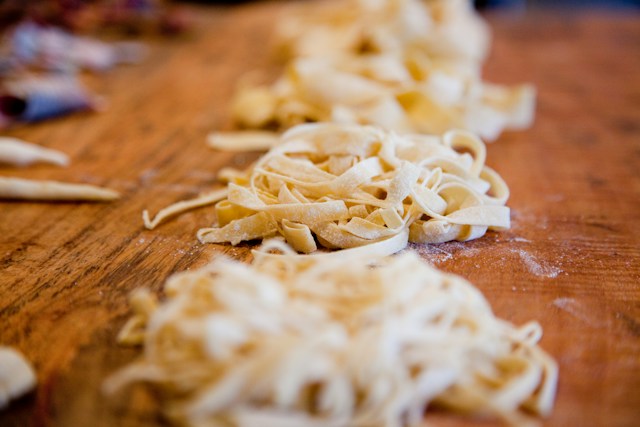
Cooking pasta involves boiling it in water, leading to starch granules' swelling and protein network expansion. The transformative process renders pasta 'al dente,' slightly chewy due to intact starch granules and a resilient protein network. The recommended water-to-pasta ratio is approximately 1:10, ensuring adequate hydration and starch dilution. Continuous boiling prevents clumping, and adding salt enhances pasta flavor.

Now equipped with insights into pasta preparation, it's time to embark on a culinary journey, creating homemade pasta and savoring the delightful interplay of flavors. Buon Appetito!

Trending Now
|
The Art of Italian Pasta Making
Explore dough's artistry—pasta, noodles, pancakes, and dumplings craft a delicious masterpiece.

In the realm of culinary delights, pasta, once considered a humble dish, has often been overlooked in favor of more sophisticated fare. However, it's time to delve into the world of pasta, exploring the nuances of dough preparation, distinguishing between fresh and dry varieties, unraveling optimal cooking times, and understanding the water-to-pasta ratio for that perfect texture. Let's commence with a fresh pasta recipe.

Ingredients:

  • 2 cups of pizza flour (250 grams) or all-purpose flour
  • 2 large eggs (approximately 110 grams)
  • 4 egg yolks (about 70 grams)
  • Salt, to taste

Instructions:

  1. Combine all ingredients in a mixing bowl using a flat beater until a smooth, uniform dough is obtained. If kneading on a flat surface, create a well in a flour mound, pour egg yolks into it, and knead circularly until a uniform dough forms. Adjust with additional flour if the dough is too sticky.
  2. Wrap the dough in plastic wrap and let it rest for at least 30 minutes at room temperature.
  3. Divide the dough into four portions, rolling each to a 3-millimeter thickness using a pasta machine or rolling pin.
  4. Shape the dough and cook in boiling water for 2-3 minutes.
  5. Repeat the process with remaining dough portions.
  6. Serve with your preferred sauce.

Now, a brief exploration into the scientific aspects of pasta:

Noodles made their debut over 4,000 years ago in China, finding their way into the culinary landscapes of Asia and Europe. While China and Italy embraced the culinary potential of wheat flour and water, their journeys led them on distinct paths.

In Italy, gluten-rich durum wheat paved the way for creating stable, protein-rich pasta. This pasta could be dried, stored indefinitely, and shaped into various forms, becoming a cornerstone of Italian cuisine. Italy cultivated an entire culinary industry around pasta, with diverse shapes and styles. In China, where wheat is low in gluten, culinary artisans specialized in crafting long, unadorned noodles, perfect for dipping into savory soups.

The term "pasta" in Italian translates to "dough" or "paste," reflecting its simple composition of wheat flour and water. The appeal of pasta lies in its delicate, moist texture and neutral flavor, serving as a versatile canvas for various ingredients and sauces.

The main ingredient in pasta is flour, predominantly comprising starches and proteins. Gluten proteins, specifically glutenins and gliadins, form an elastic network, imparting flexibility to the dough. The choice of flour is crucial, and semolina flour from durum wheat is favored for pasta making. Coarse milling preserves proteins' original shape and minimizes damage to starch clusters.

Fresh vs. dried pasta hinges on flour type. Dry pasta, made from semolina flour and water, undergoes high-temperature drying, resulting in a hard, brittle texture with an extended shelf life. Fresh pasta, enriched with eggs, offers a pliable, easy-to-knead dough. Egg yolks contribute color, flavor, and a silky texture, counterbalanced by the strength of egg whites, enhancing the gluten network.

Cooking pasta involves boiling it in water, leading to starch granules' swelling and protein network expansion. The transformative process renders pasta 'al dente,' slightly chewy due to intact starch granules and a resilient protein network. The recommended water-to-pasta ratio is approximately 1:10, ensuring adequate hydration and starch dilution. Continuous boiling prevents clumping, and adding salt enhances pasta flavor.

Now equipped with insights into pasta preparation, it's time to embark on a culinary journey, creating homemade pasta and savoring the delightful interplay of flavors. Buon Appetito!

Trending Now