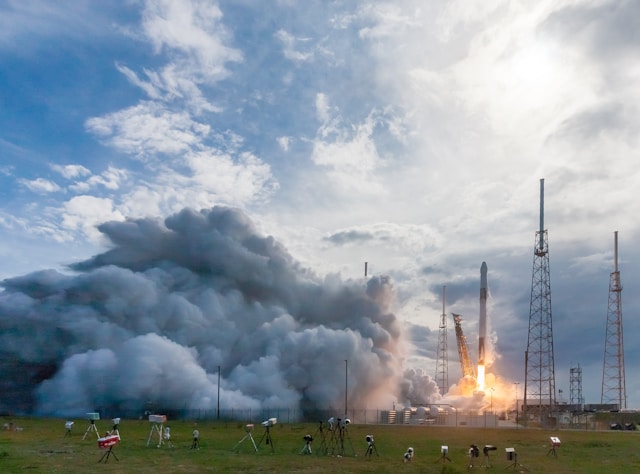
Let's know about top 3 launches!
3. Rosetta Mission
The Rosetta mission signified a monumental achievement in space exploration. Launched on March 2, 2004, aboard an Ariane 5 rocket, Rosetta embarked on a decade-long journey to Comet 67P/Churyumov-Gerasimenko. On August 6, 2014, it became the first spacecraft ever to enter a comet's orbit, delivering breathtaking images and data about this icy celestial body.
On November 12, 2014, the Rosetta lander, Philae, detached and attempted the historic first landing on a comet's surface. Unfortunately, Philae's landing didn’t go as intended; anchoring harpoons failed to deploy, resulting in the lander bouncing twice before resting on the surface, where it was shrouded in perpetual shadow, limiting solar power for operations.
Despite these challenges, Rosetta continued to orbit 67P for two more years, studying its features and the effects of solar proximity. In July 2015, a brief resurgence in power allowed Philae to communicate with Rosetta before ceasing operations for good. The mission concluded on September 30, 2016, when Rosetta executed a dramatic controlled descent into the comet's frigid surface.
2. JUICE (Jupiter Icy Moons Explorer)
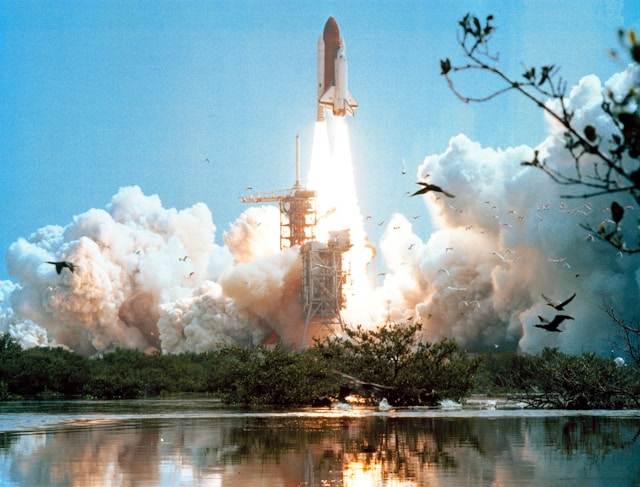
On April 14, 2023, the Ariane 5 rocket soared into the sky once more, this time carrying the Jupiter Icy Moons Explorer (JUICE) on its ambitious journey. Designed to last over 7.5 years, JUICE will navigate the complexities of space, performing gravity-assist flybys around Earth and Venus before arriving at the Jovian system in December 2031.
Once it reaches Jupiter, JUICE will spend three years conducting detailed investigations of three of its largest moons: Europa, Callisto, and Ganymede. Europa, known for its potential to harbor life, will undergo two close flybys. JUICE will also explore Callisto, one of the oldest planetary bodies, and finally, investigate Ganymede — the largest moon in the solar system. Ganymede boasts its own magnetic field, a rarity among moons, and JUICE aims to unravel its mysteries by analyzing its surface and underlying ocean for signs of habitability.
1. James Webb Space Telescope
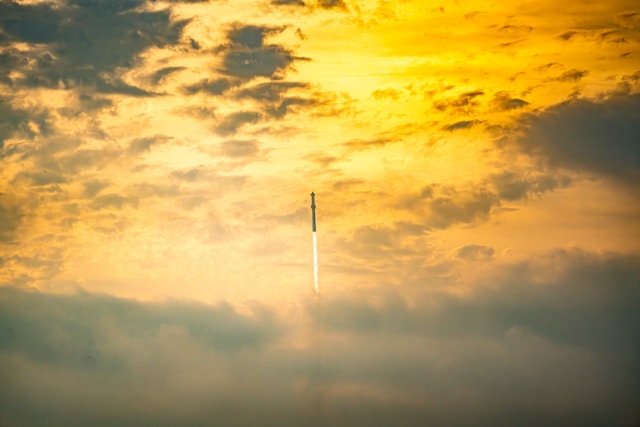
Topping our list is none other than the James Webb Space Telescope (JWST), launched aboard an Ariane 5 rocket on December 25, 2021. Renowned for being the most powerful and largest space observatory ever built, JWST marked a new era in astronomical exploration.
Featuring a colossal sunshield and an 18-segment primary mirror spanning 21 feet (6.5 meters), JWST is stationed at L2, approximately one million miles from our planet. Its mission encompasses delving into the universe’s earliest light, uncovering galaxies from the dawn of time, characterizing distant exoplanets, and revealing intricate details about star clusters and nebulae.
Already, JWST has provided stunning observations of planets in our own solar system, including breathtaking imagery of Uranus. With a mission expected to last over a decade, it will continue to unlock the cosmos's secrets and expand our understanding of the universe.
Each of these historic launches represents a testament to the prowess of the Ariane 5 rocket and its irreplaceable role in advancing our journey into space.