Exploring the World of Traditional Thai Dresses: A Journey Through Elegance
Thailand's traditional attire, known as chut Thai, is an iconic representation of the country's rich culture and history. What many may not realize is that chut Thai encompasses a variety of styles, each with its unique significance and purpose. These styles have been formalized into eight distinct ensembles for women attending official functions, thanks to the vision and influence of Her Majesty Queen Sirikit, the Queen Mother of Thailand. This article will delve into the historical origins of chut Thai, distinguish between the different styles, and shed light on the resurgence of Thai textiles.

Thailand's traditional attire, known as chut Thai, is an iconic representation of the country's rich culture and history. What many may not realize is that chut Thai encompasses a variety of styles, each with its unique significance and purpose. These styles have been formalized into eight distinct ensembles for women attending official functions, thanks to the vision and influence of Her Majesty Queen Sirikit, the Queen Mother of Thailand. This article will delve into the historical origins of chut Thai, distinguish between the different styles, and shed light on the resurgence of Thai textiles.

The Roots of Chut Thai

The language of style transcends spoken words, communicating through textures, colors, and designs. Her Majesty Queen Sirikit, born to Prince Nakkhatra Mangkala Kitiyakara, was raised in the prominent social circles of Europe. Her father's role as Thailand's ambassador to the United Kingdom, Denmark, and France exposed her to diplomacy and fashion, experiences that would shape her role as Queen.

Upon her marriage to His Majesty King Bhumibol Adulyadej the Great, the royal couple embarked on a historic tour of 15 nations. It was during this time that Queen Sirikit recognized the absence of an official Thai ensemble that accurately represented her nation. In response, she engaged designers and researchers to create not only her wardrobe for official functions in various climates but also garments that could convey the essence of Thai identity. These dresses had to encompass elements of traditional Thai attire and feature Thai textiles, particularly silk, while emphasizing the beauty of handmade, handwoven fabrics.
The Eight Thai Dresses

Under Queen Sirikit's guidance, fashion designers and researchers developed the eight styles of Thai dresses collectively known as Chut Thai Phra Rajaniyom, meaning "Thai outfits of royal favor." Drawing inspiration from historical records of royal clothing, they crafted a range of ensembles suited for diverse occasions, varying in formality and complexity. These chut Thai are a celebration of femininity and sophistication.

Ruean Ton: Casual Comfort

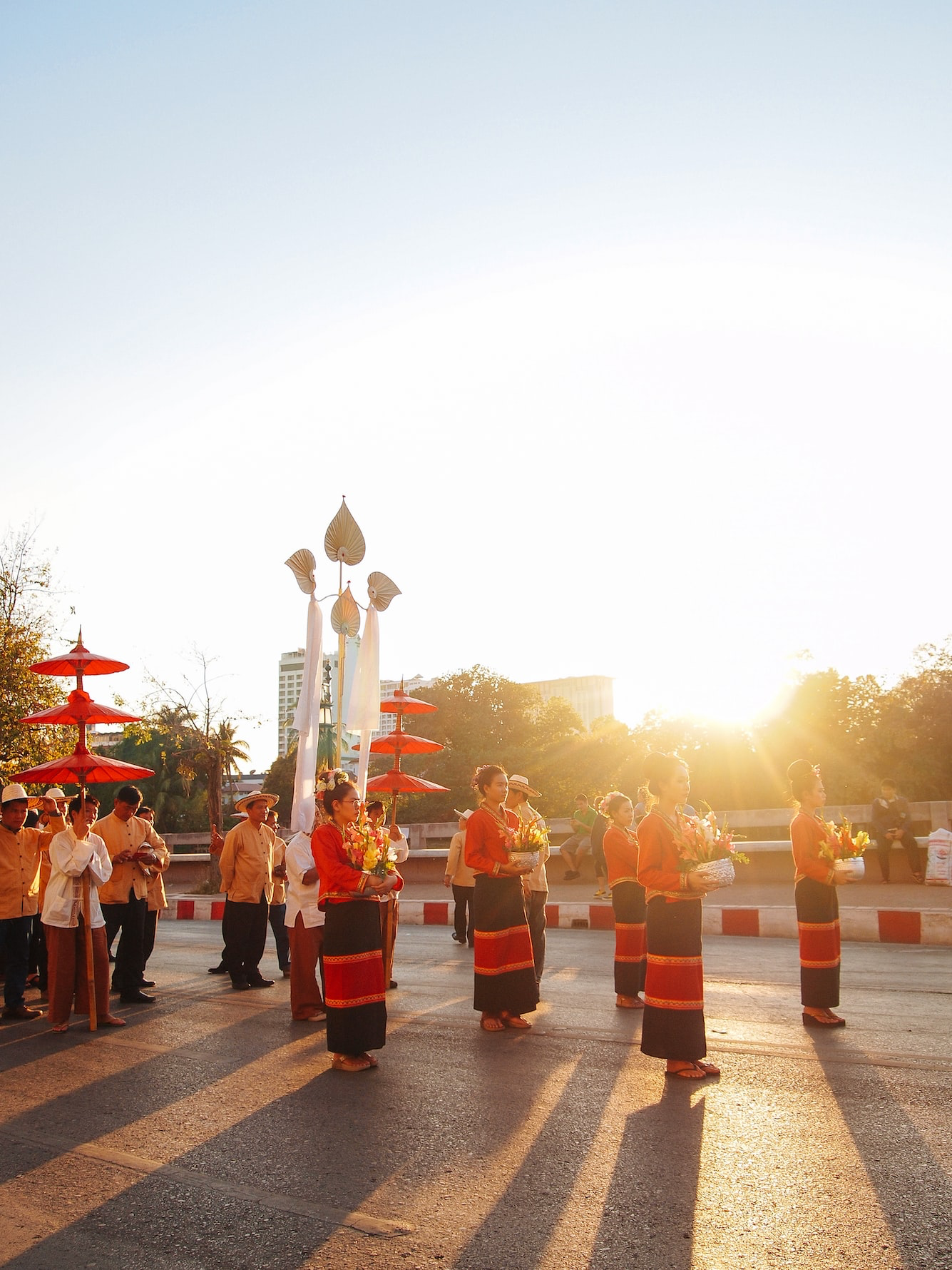
The Ruean Ton is a casual and comfortable ensemble featuring a collarless blouse and an ankle-length sarong or sinh. The sinh typically showcases horizontal stripes, often near the skirt's hem, with a blouse adorned with five buttons down the center and three-quarter sleeves. This attire, named after the teak houses of Dusit Palace in Bangkok, serves as the informal and relaxed chut Thai. It is commonly worn for religious ceremonies, holidays, temple visits, and as a uniform in the hospitality industry.

Chitralada: Dignified Daytime Dress

Named after the Chitralada Royal Villa, the Chitralada style is more formal than Ruean Ton. It features a blouse with a short, standing collar and may include intricate flower embroidery throughout the ensemble. Depending on the fabrics used, it can be worn during daytime ceremonies, royal events, and official visits that do not require the display of insignia. Black versions of the Chitralada are worn during funerals or periods of mourning.

Amarin: Elegant Evening Attire

The Amarin style, named after the Amarin Winitchai Throne Hall, resembles the Chitralada but employs more luxurious fabrics. It is often accompanied by an extravagant set of jewelry and may incorporate gold thread (silk brocade), especially in the flower embroidery. Depending on the occasion, it may be adorned with insignia. The Amarin ensemble is fitting for evening functions, receptions, theater outings, royal ceremonies, processions, association gatherings, and other events that call for full- or half-dress attire.

Boromphiman: The Slender Silhouette

Named after the Boromphiman Throne Hall, the Boromphiman style also features luxurious fabrics, typically Thai silk or silk brocade. Distinguishing features include a blouse without buttons, an option to open at the front or back, and a blouse sewn into the sinh as a single piece. The sarong is pleated in front, a style known as Jeeb Wai Chai Pok, and it includes an ornamental belt. Considered formal, the Boromphiman is donned for evening functions, gala dinners, royal and official receptions, and by royal brides.

Dusit: Western-Style Gown

Named after the Dusit Maha Prasat Throne Hall, the Dusit style stands apart from the others. Its blouse is sleeveless with a round neckline and backline. It opens at the back and is adorned with sewn-on jewelry such as pearls, beads, and sequins. This ensemble is paired with a gold brocade sinh, pleated in the front, and accessorized with a belt. The Dusit style is equivalent to a formal Western-style evening gown.

Chakri: Traditional, Ornate, and Iconic

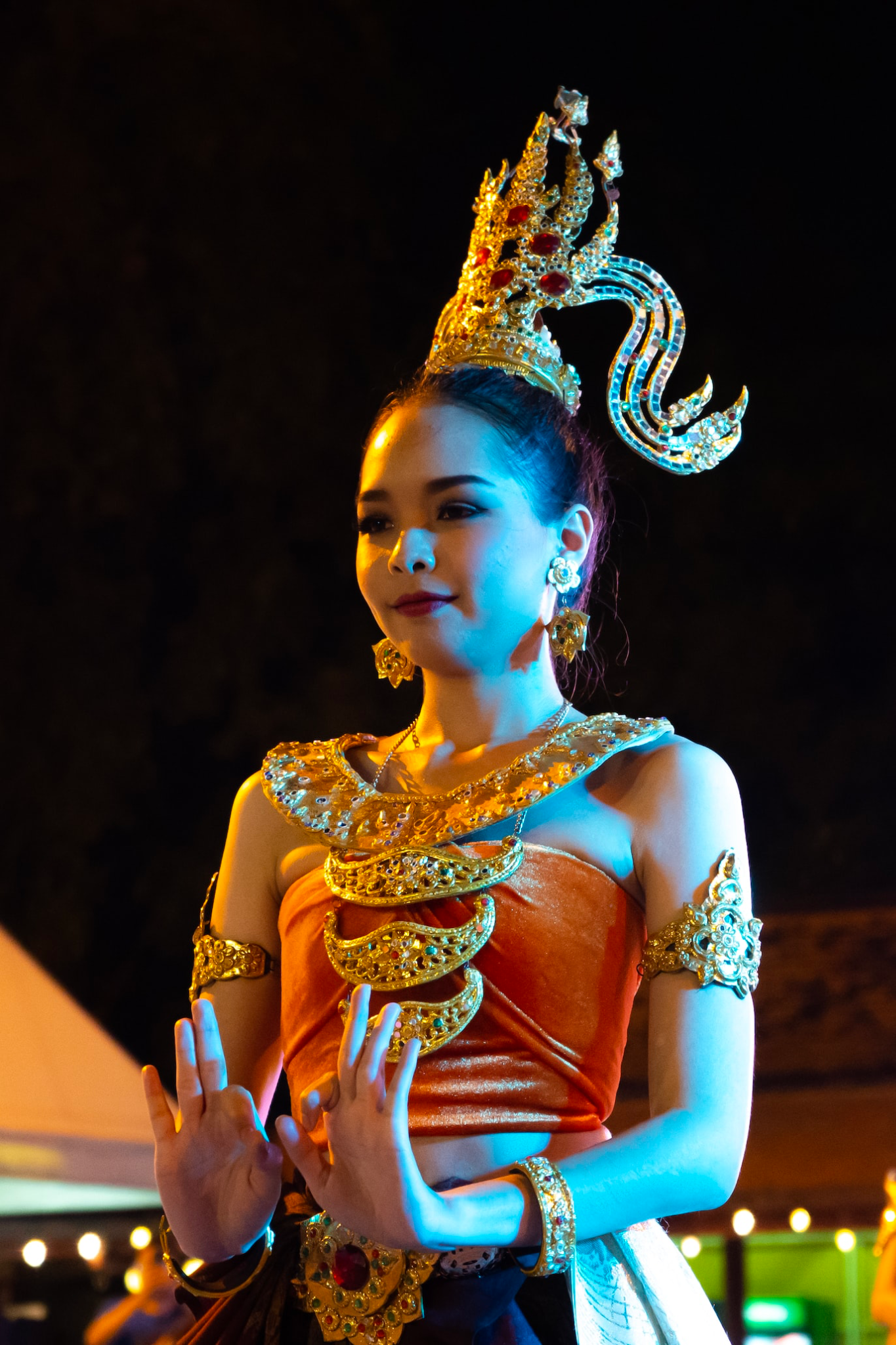
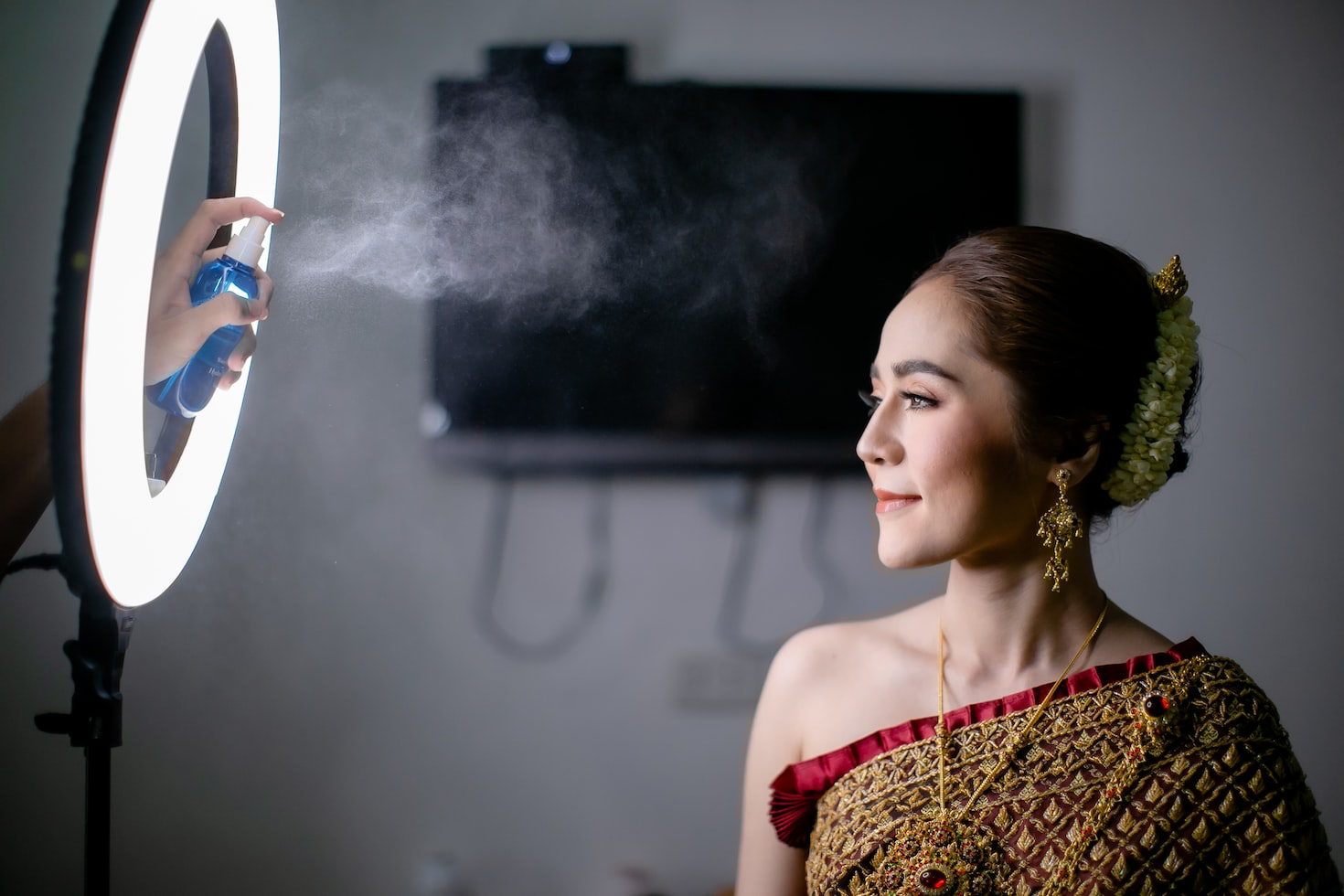
Named after the Chakri Maha Prasat Throne Hall, the Chakri style is what often comes to mind when one thinks of traditional Thai dress. It is made of gold or silver metal-thread brocade and consists of a bodice wrapped in a single shawl or sabai draped across the chest over the non-dominant shoulder, exposing the other shoulder. The sinh features the signature front pleat and is accompanied by an ornate belt and necklace. The Chakri, considered an evening dress, is worn at royal ceremonies and by brides-to-be during daytime engagement ceremonies or weddings.

Chakraphat: Layers of Elegance

Named after the Chakraphat Phiman Throne Hall, the Chakraphat style is similar to the Chakri but even more elegant. The key distinction is the use of two layered sabai. The outer shawl is often highly ornate with intricate embroidery. The Chakraphat ensemble is heavily accessorized, including a necklace, belt, tiara, armbands, bracelets, and earrings, depending on the occasion. It is suitable for formal banquets and official dinners.

Siwalai: Formal, Traditional, and Modest

Named after Siwalai Garden in the Grand Palace, the Siwalai style includes a long-sleeve blouse with a short standing collar, a sabai draped across the chest similar to the Chakraphat, and a sinh with a front pleat that can either be a separate piece or sewn into the blouse as one dress, akin to the Boromphiman. The Siwalai style is commonly seen at royal ceremonies and at very formal daytime and evening events.

These eight styles of chut Thai are a testament to the beauty and diversity of Thai culture. Each ensemble reflects not only the nation's identity but also the refinement and elegance of Thai women. The rich history and symbolism woven into these dresses make them more than just garments; they are living testaments to a legacy of grace, sophistication, and tradition.

Trending Now
|
Exploring the World of Traditional Thai Dresses: A Journey Through Elegance
Thailand's traditional attire, known as chut Thai, is an iconic representation of the country's rich culture and history. What many may not realize is that chut Thai encompasses a variety of styles, each with its unique significance and purpose. These styles have been formalized into eight distinct ensembles for women attending official functions, thanks to the vision and influence of Her Majesty Queen Sirikit, the Queen Mother of Thailand. This article will delve into the historical origins of chut Thai, distinguish between the different styles, and shed light on the resurgence of Thai textiles.

Thailand's traditional attire, known as chut Thai, is an iconic representation of the country's rich culture and history. What many may not realize is that chut Thai encompasses a variety of styles, each with its unique significance and purpose. These styles have been formalized into eight distinct ensembles for women attending official functions, thanks to the vision and influence of Her Majesty Queen Sirikit, the Queen Mother of Thailand. This article will delve into the historical origins of chut Thai, distinguish between the different styles, and shed light on the resurgence of Thai textiles.

The Roots of Chut Thai

The language of style transcends spoken words, communicating through textures, colors, and designs. Her Majesty Queen Sirikit, born to Prince Nakkhatra Mangkala Kitiyakara, was raised in the prominent social circles of Europe. Her father's role as Thailand's ambassador to the United Kingdom, Denmark, and France exposed her to diplomacy and fashion, experiences that would shape her role as Queen.

Upon her marriage to His Majesty King Bhumibol Adulyadej the Great, the royal couple embarked on a historic tour of 15 nations. It was during this time that Queen Sirikit recognized the absence of an official Thai ensemble that accurately represented her nation. In response, she engaged designers and researchers to create not only her wardrobe for official functions in various climates but also garments that could convey the essence of Thai identity. These dresses had to encompass elements of traditional Thai attire and feature Thai textiles, particularly silk, while emphasizing the beauty of handmade, handwoven fabrics.

The Eight Thai Dresses

Under Queen Sirikit's guidance, fashion designers and researchers developed the eight styles of Thai dresses collectively known as Chut Thai Phra Rajaniyom, meaning "Thai outfits of royal favor." Drawing inspiration from historical records of royal clothing, they crafted a range of ensembles suited for diverse occasions, varying in formality and complexity. These chut Thai are a celebration of femininity and sophistication.

Ruean Ton: Casual Comfort

The Ruean Ton is a casual and comfortable ensemble featuring a collarless blouse and an ankle-length sarong or sinh. The sinh typically showcases horizontal stripes, often near the skirt's hem, with a blouse adorned with five buttons down the center and three-quarter sleeves. This attire, named after the teak houses of Dusit Palace in Bangkok, serves as the informal and relaxed chut Thai. It is commonly worn for religious ceremonies, holidays, temple visits, and as a uniform in the hospitality industry.

Chitralada: Dignified Daytime Dress

Named after the Chitralada Royal Villa, the Chitralada style is more formal than Ruean Ton. It features a blouse with a short, standing collar and may include intricate flower embroidery throughout the ensemble. Depending on the fabrics used, it can be worn during daytime ceremonies, royal events, and official visits that do not require the display of insignia. Black versions of the Chitralada are worn during funerals or periods of mourning.

Amarin: Elegant Evening Attire

The Amarin style, named after the Amarin Winitchai Throne Hall, resembles the Chitralada but employs more luxurious fabrics. It is often accompanied by an extravagant set of jewelry and may incorporate gold thread (silk brocade), especially in the flower embroidery. Depending on the occasion, it may be adorned with insignia. The Amarin ensemble is fitting for evening functions, receptions, theater outings, royal ceremonies, processions, association gatherings, and other events that call for full- or half-dress attire.

Boromphiman: The Slender Silhouette

Named after the Boromphiman Throne Hall, the Boromphiman style also features luxurious fabrics, typically Thai silk or silk brocade. Distinguishing features include a blouse without buttons, an option to open at the front or back, and a blouse sewn into the sinh as a single piece. The sarong is pleated in front, a style known as Jeeb Wai Chai Pok, and it includes an ornamental belt. Considered formal, the Boromphiman is donned for evening functions, gala dinners, royal and official receptions, and by royal brides.

Dusit: Western-Style Gown

Named after the Dusit Maha Prasat Throne Hall, the Dusit style stands apart from the others. Its blouse is sleeveless with a round neckline and backline. It opens at the back and is adorned with sewn-on jewelry such as pearls, beads, and sequins. This ensemble is paired with a gold brocade sinh, pleated in the front, and accessorized with a belt. The Dusit style is equivalent to a formal Western-style evening gown.

Chakri: Traditional, Ornate, and Iconic

Named after the Chakri Maha Prasat Throne Hall, the Chakri style is what often comes to mind when one thinks of traditional Thai dress. It is made of gold or silver metal-thread brocade and consists of a bodice wrapped in a single shawl or sabai draped across the chest over the non-dominant shoulder, exposing the other shoulder. The sinh features the signature front pleat and is accompanied by an ornate belt and necklace. The Chakri, considered an evening dress, is worn at royal ceremonies and by brides-to-be during daytime engagement ceremonies or weddings.

Chakraphat: Layers of Elegance

Named after the Chakraphat Phiman Throne Hall, the Chakraphat style is similar to the Chakri but even more elegant. The key distinction is the use of two layered sabai. The outer shawl is often highly ornate with intricate embroidery. The Chakraphat ensemble is heavily accessorized, including a necklace, belt, tiara, armbands, bracelets, and earrings, depending on the occasion. It is suitable for formal banquets and official dinners.

Siwalai: Formal, Traditional, and Modest

Named after Siwalai Garden in the Grand Palace, the Siwalai style includes a long-sleeve blouse with a short standing collar, a sabai draped across the chest similar to the Chakraphat, and a sinh with a front pleat that can either be a separate piece or sewn into the blouse as one dress, akin to the Boromphiman. The Siwalai style is commonly seen at royal ceremonies and at very formal daytime and evening events.

These eight styles of chut Thai are a testament to the beauty and diversity of Thai culture. Each ensemble reflects not only the nation's identity but also the refinement and elegance of Thai women. The rich history and symbolism woven into these dresses make them more than just garments; they are living testaments to a legacy of grace, sophistication, and tradition.

Trending Now