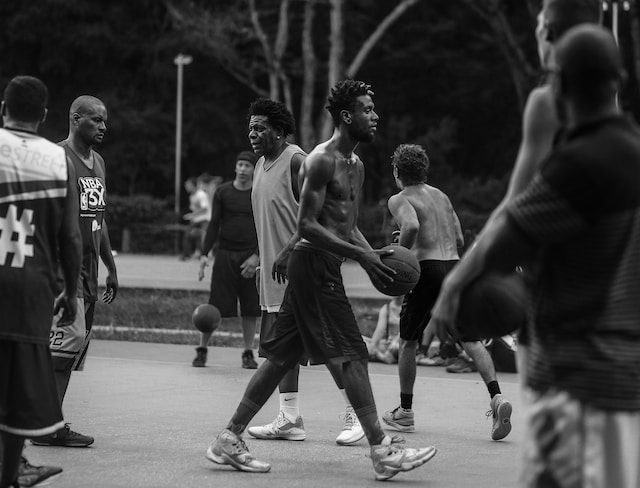
Dive into the vibrant world of streetball, the raw and dynamic variant of basketball that emerged from the bustling streets of New York. From its humble beginnings to influencing professional sports, streetball has etched its mark on the global basketball scene.
Holcombe Rucker's Legacy
In the mid-1940s, Holcombe Rucker, a visionary teacher and playground director in Harlem, New York, laid the foundation for streetball by organizing local basketball tournaments. What began as grassroots competitions in Harlem evolved into the New York City pro-am basketball tournament in 1950. The tournaments found a permanent home at PS 156, a small park between 155th Street and Frederick Douglass Boulevard. This park, now known as Rucker Park, gained legendary status for nurturing ABA and NBA talents. Despite Rucker's passing in 1965, the tournaments' legacy endured, prompting the city of New York to rename PS 156 as Rucker Park in 1974.
Greg Marius and the Entertainers Basketball Classic
In 1982, the streetball landscape witnessed the rise of Greg Marius, a young rapper who organized tournaments involving local hip-hop crews. Rucker Park became the stage for the iconic Entertainers Basketball Classic, where streetball legends and NBA superstars converged. The court bore witness to the skills of basketball icons like Wilt Chamberlain, Kareem Abdul-Jabbar, Allen Iverson, Kobe Bryant, LeBron James, and many more. Marius's impact resonated globally, propelling streetball into mainstream consciousness.
AND1 Mixtape Tour: A Global Phenomenon
The late '90s ushered streetball onto the global stage with the inception of the AND1 Mixtape Tour in 1998. This transformative tour transcended the confines of the USA, showcasing streetball legends like Skip 2 My Lou, Hot Sauce, and The Professor on ESPN. TV shows such as City Slam and films like "Above the Rim," "White Men Can't Jump," and the 2013 documentary "Doin' It in the Park" further catapulted streetball and its players into the mainstream spotlight.
Understanding Streetball
Rooted in the streets and parks of New York, streetball represents a freer, less formalized version of basketball. Diverging from the rigid structure of traditional basketball, streetball thrives on individual flair and a relaxed interpretation of rules. Notably, streetball lacks official referees, relying on players to settle scoring disputes amicably.
Streetball accommodates varying team sizes, ranging from two players (one on each side) to eight players (four on each side), although the latter can get crowded. The scoring system in streetball deviates from traditional basketball, with shots beyond the three-point line counting as two points, and shots inside the three-point line counting as one.
Streetball Dynamics: Individualism and Impressive Styles
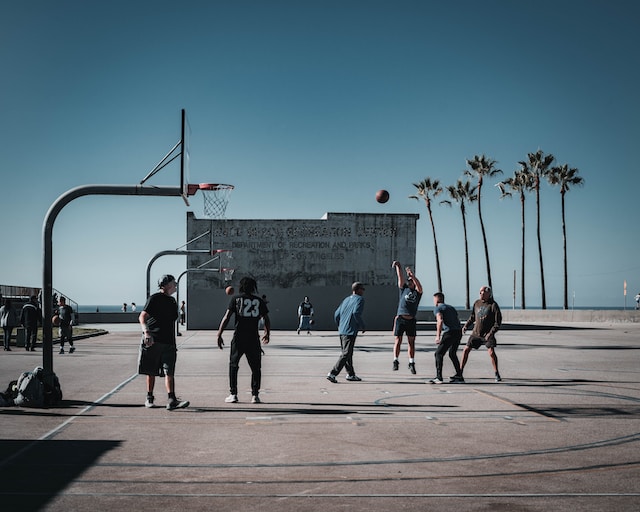
Beyond team dynamics, streetball emphasizes individual skills, fostering a one-on-one playing style. Players showcase their dribbling prowess, employing various crossovers to outmaneuver opponents. The unwritten rule in streetball dictates that the more impressive your style, the greater the respect you earn. Games typically follow a first-to-11 point system, although variations exist based on court availability.
Streetball Rules and Unwritten Etiquette
Given the player-driven nature of streetball, each court may have its own set of rules. However, some fundamental rules apply universally:
Determine Possession: A three-pointer determines which team possesses the ball initially.
Post-Dead Ball Start: Each attack after a dead ball starts with a 'check' outside the three-point line.
Scoring System: Shots from beyond the three-point line count as two points; inside the three-point line, it's one point.
Player-Declared Fouls: In the absence of officials, players declare fouls, emphasizing honesty and fair play.
No Free Throws: Fouls result in possession for the fouled team, without free throws.
Make It, Take It: After a successful basket, the attacking team retains possession.
Signature Streetball Events
Red Bull Half Court: A global 3on3 tournament with stops in over 20 countries since 2021.
FIBA 3x3 World Tour: The pinnacle of 3on3 basketball, featuring teams from cities worldwide in a tournament format from May to December.
FIBA 3x3 Women's Series: A global series mirroring the men's counterpart, running from May to September with elite teams competing in tournaments across the globe.
Embark on a journey through the streets, parks, and iconic courts where streetball thrives—a world where individuality, flair, and raw talent reign supreme.