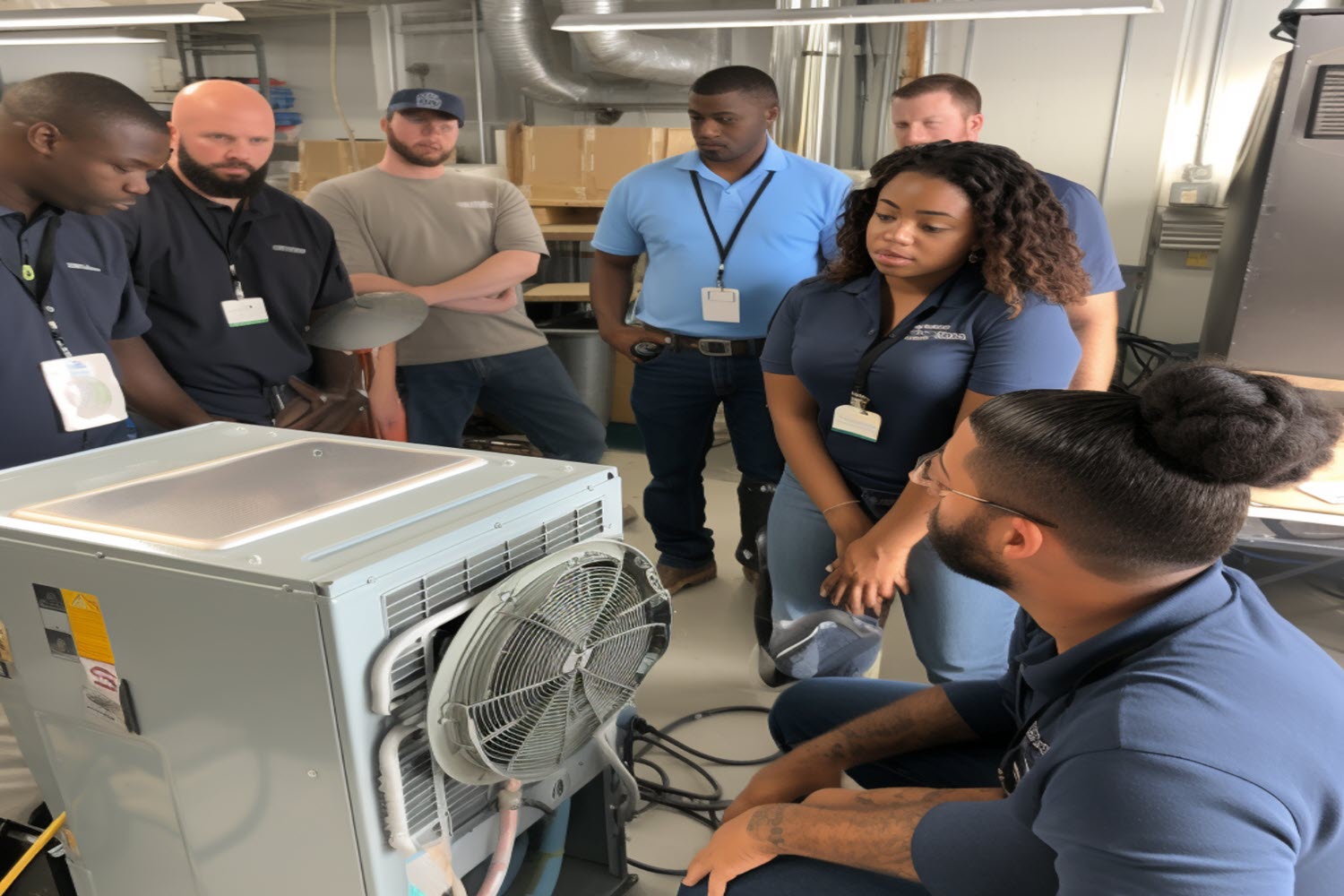
What is an HVAC apprenticeship program?
An HVAC apprenticeship program is a comprehensive training program that combines hands-on experience with classroom instruction. Participants work under the guidance of experienced HVAC professionals while taking classes to learn basic theoretical concepts related to HVAC systems. This dual approach ensures that apprentices master both practical skills and the fundamentals of HVAC technology.
Why choose the HVAC industry as a career?
1. High Demand
HVAC technicians are in high demand due to the need for heating and cooling systems in homes, businesses, and industrial sectors. With the growing focus on energy efficiency and sustainability, HVAC jobs are expected to grow 5% over the next decade, faster than most other occupations.
2. Good Salaries
Entry-level HVAC technicians can earn between $40,000 and $50,000 per year, while experienced technicians can earn more than $80,000 per year. HVAC professionals with specialized skills or who work as independent contractors typically earn more. [Salary data source: https://www.indeed.com/]
3. Career Development
The HVAC industry offers a clear career path. You can start as an apprentice, advance to a senior technician, or even transition into project management or entrepreneurship. There is a lot of opportunity for growth.
HVAC Training Resources
Thanks to online platforms, government programs, and nonprofit organizations, aspiring HVAC professionals can receive training. Here are some of the most useful resources:
1. Online Courses
• SkillCat
SkillCat offers HVAC courses including EPA 608 certification. The platform also connects students with potential employers.
• Danfoss Learning
Danfoss offers professional content in refrigeration and HVAC systems, with a focus on energy efficiency. This is perfect for those who have some experience in the field.
• Alison
Alison offers HVAC courses that cover both theoretical knowledge and practical skills. These courses are perfect for beginners who want to build a solid foundation in HVAC.
2. Government and Community Programs
•One-Stop Job Centers
Federal-funded workforce development programs offer HVAC training in some states, especially for low-income individuals.
•Goodwill Career Programs
Goodwill offers HVAC training in several cities to help individuals quickly enter the workforce.
3. Apprenticeship and Union Programs
•United Association (UA) Union
UA offers paid apprenticeships that provide hands-on training, theory classes, and certification assistance.
•Local HVAC Companies
Many HVAC companies offer training for entry-level employees and often cover the cost of certification.
4. Online Resources
•HVAC School Podcasts
The HVAC School Podcast offers articles, interviews, and technical advice to help HVAC professionals at every level.
•YouTube Channels
Channels such as "AC Service Tech" and "HVAC School" offer instructional videos, from basic concepts to advanced techniques.
Maximize HVAC Resources
To get the most out of your training, follow these steps:
1. Set clear learning goals
• If you’re a beginner, start with SkillCat or Alison to learn basic HVAC concepts.
• For more experienced learners, Danfoss or HVAC School can help you expand your technical knowledge.
2. Get hands-on experience
HVAC is a hands-on field, so after completing your online course, look for apprenticeship opportunities to apply what you’ve learned.
3. Get certified
Many programs offer EPA 608 certification, which is essential for HVAC technicians. Earning this certification will greatly increase your job prospects.
4. Stay updated
HVAC technology is constantly evolving. Take new courses regularly to learn about innovative technologies such as smart thermostats and energy-saving systems.
Career Growth: From Apprentice to Expert
Once you’re in the HVAC field, you can advance your career by:
1. Expand Your Skills
As you gain experience, pursue advanced certifications, such as NATE (North American Award for Technical Excellence) or LEED (Leadership in Energy and Environmental Design).
2. Build Your Network
Attend industry events, join HVAC organizations, and connect with experts to advance your career.
3. Create a Plan for Long-Term Success
Whether you specialize in a specific system or move into management, you need a clear career path to guide your growth.
Success Stories
• John’s Success
John used Goodwill’s HVAC training to get his EPA certification and start his own HVAC business. Now, he makes over $120,000 per year.
• Emily’s Growth
Emily took SkillCat’s courses, earned her EPA 608 certification, and quickly advanced to a master technician in commercial HVAC.
Conclusion: Take the Leap
HVAC training offers a great opportunity to start a new career. With the right resources and a commitment to learning, you can grow from beginner to expert. Don't wait - take advantage of these helpful resources and start building your future in HVAC today!