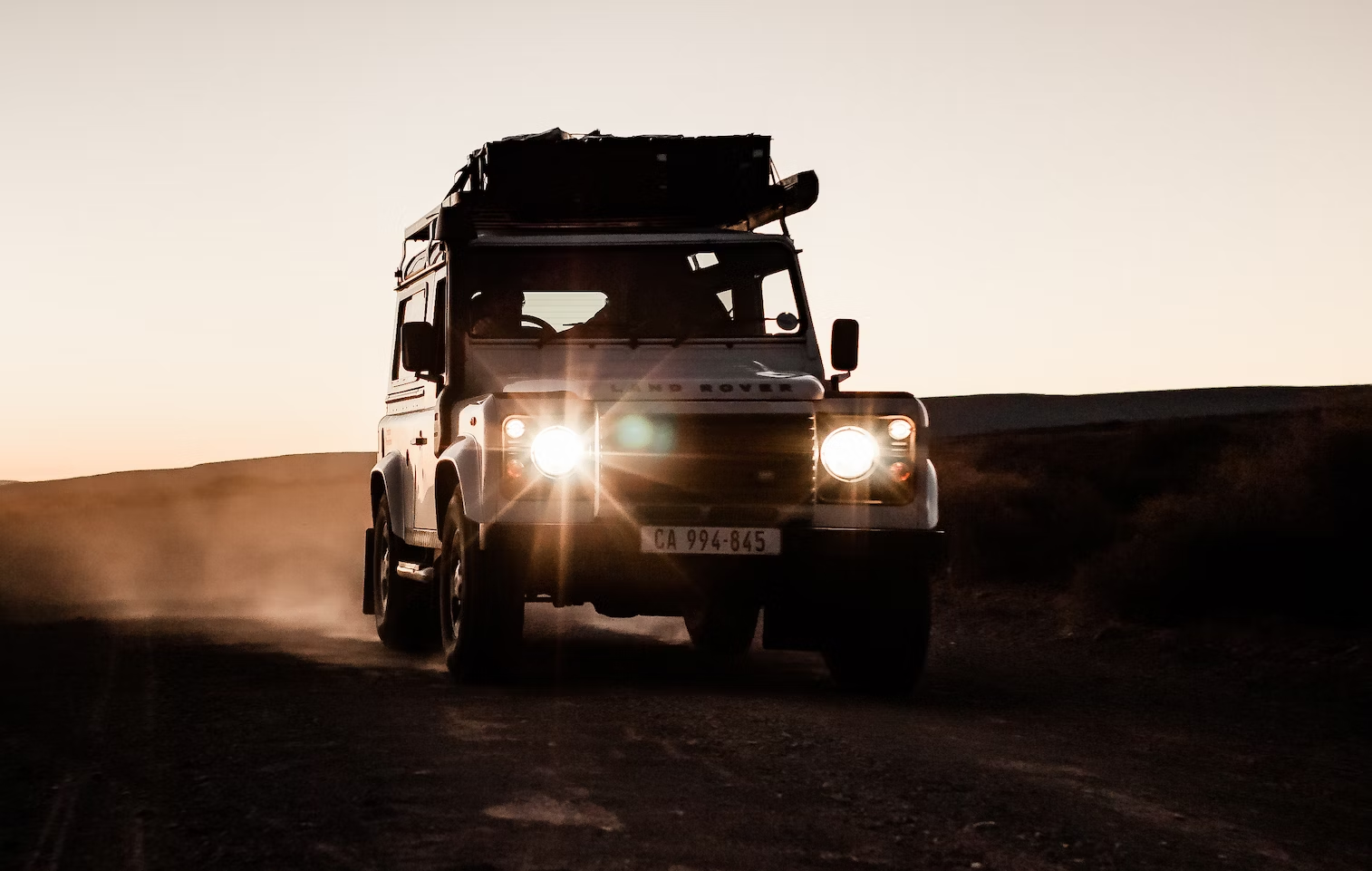
Lifted trucks have a storied history that spans decades. Like many groundbreaking inventions, their origins lie in addressing practical challenges. One question loomed large: how do you navigate and transport equipment and supplies in some of the world's most remote and unforgiving terrains? The ingenious solution was to elevate a truck's suspension, creating room for larger, more robust tires. This innovation paved the way for companies, individuals, and even the U.S. military to traverse uneven ground without breaking a sweat. Today, lifted trucks are not only a common sight but have carved a prominent place in the mainstream truck market. This article takes you on a journey through the evolution of lifted trucks and their arrival in the contemporary truck market.
The Emergence of Off-Road Vehicles
The concept of off-road vehicles was a far cry from the norm until the early 1900s when the Kegresse track made its debut. Adolphe Kegresse's journey into this realm commenced in 1906 when he embarked on a collaboration with Tsar Nicholas II of Russia. Over the next decade, Kegresse developed a novel type of vehicle explicitly tailored for soft driving conditions. These conditions encompassed terrains like dirt, grass, and snow. The Kegresse track featured a continuous line of rubber tracks moving along a conveyor, replacing conventional interlocking metal tires.
Although it might resemble a vintage snowmobile by modern standards, it marked a seismic shift in the world of automobiles at the time. A fleet of these novel half-track vehicles undertook an ambitious journey across the Sahara Desert between December 1922 and March 1923. Georges-Marie Haardt and Louis Audouin-Dubreuil were at the helm of this remarkable expedition. Their exploits garnered considerable attention, inciting the automotive industry's intrigue in off-road vehicles.
Prepping for War
The success of the Kegresse track ushered in a new era during WWII. Off-road vehicles assumed a pivotal role in transporting equipment and supplies to some of the most remote corners of the globe. These vehicles were tasked with conquering mud, dirt, snow, and other challenging terrains without succumbing to the adversities of the environment. Unlike the Kegresse half-track, many of these new off-road vehicles were lifted to accommodate larger tires. This transformation permitted swift traversal of diverse terrains, affording both warring factions a strategic advantage.
The U.S. military had already recognized the potential of this technology even before WWII. During the 1920s, the U.S. Army procured several Citroën vehicles equipped with the Kegresse track. These vehicles underwent evaluation for their suitability in wartime conditions. The U.S. Army eventually acquired a license to produce these vehicles domestically, enabling refinement of this technology before WWII's commencement.
The Nazis also harnessed this technology to facilitate the transportation of equipment and armaments across unpaved surfaces. This expansion broadened the scope of war to new continents and regions previously deemed impassable for vehicles.
In sum, the war effort expedited the development of off-road vehicles, elevating their speed and functionality. Government contractors began favoring suspension lifts over the Kegresse half-track, thereby sowing the seeds of the modern lifted truck.
Transition to the Civilian Realm
As WWII drew to a close, various industries began embracing lifted trucks and off-road vehicles for their purposes. The construction and freight sectors were among the first to harness the potential of lifted trucks in the private sector. These companies often encountered the need to transport heavy equipment and supplies to remote locations, particularly during the construction of new roads and bridges where paved surfaces were scarce.
The post-WWII era witnessed a surge in lifted trucks and off-road vehicles, spurred on by initiatives like the New Deal, which aimed to revitalize the nation by embarking on ambitious projects, including the construction of bridges and public infrastructure. These vehicles eased access to otherwise challenging locations, accelerating the construction process.
Manufacturers Dive into Off-Roading
For an extended period, lifted trucks and off-road vehicles primarily served commercial and industrial purposes. Yet, as Americans explored and developed new, untamed regions of the country, they encountered a pressing issue: their vehicles were ill-equipped to handle the rugged outdoors. Mud, snow, formidable rocks, and dirt thwarted civilians' attempts to perform various tasks in the wilderness, such as hauling equipment, erecting new structures, or embarking on extended hunting trips.
One of the earliest civilian off-road vehicles, the British Land Rover, became available to the public in the 1940s, largely mirroring the vehicles employed during WWII. In the 1940s, Jeep introduced its own line of off-road vehicles, including the Jeep Station Wagon and the first Jeep Truck.
The late 1960s witnessed the debut of the sport utility vehicle (SUV), catering to middle-class families seeking adventure, hunters, and outdoor enthusiasts. Ford unveiled the Ford Bronco in 1966, targeting this specific demographic. The Toyota Land Cruiser soon followed suit.
While these early off-road truck models may not have featured the towering lifts we associate with today's trucks, they represented the initial attempts to address the requirements of consumers who relished wilderness exploration. These vehicles incorporated four-wheel drive systems and boasted thicker, wider tires designed for off-road use. At this point, it was unusual for drivers to perform suspension lifts themselves; instead, most relied on factory models.
The Monster Truck Revolution
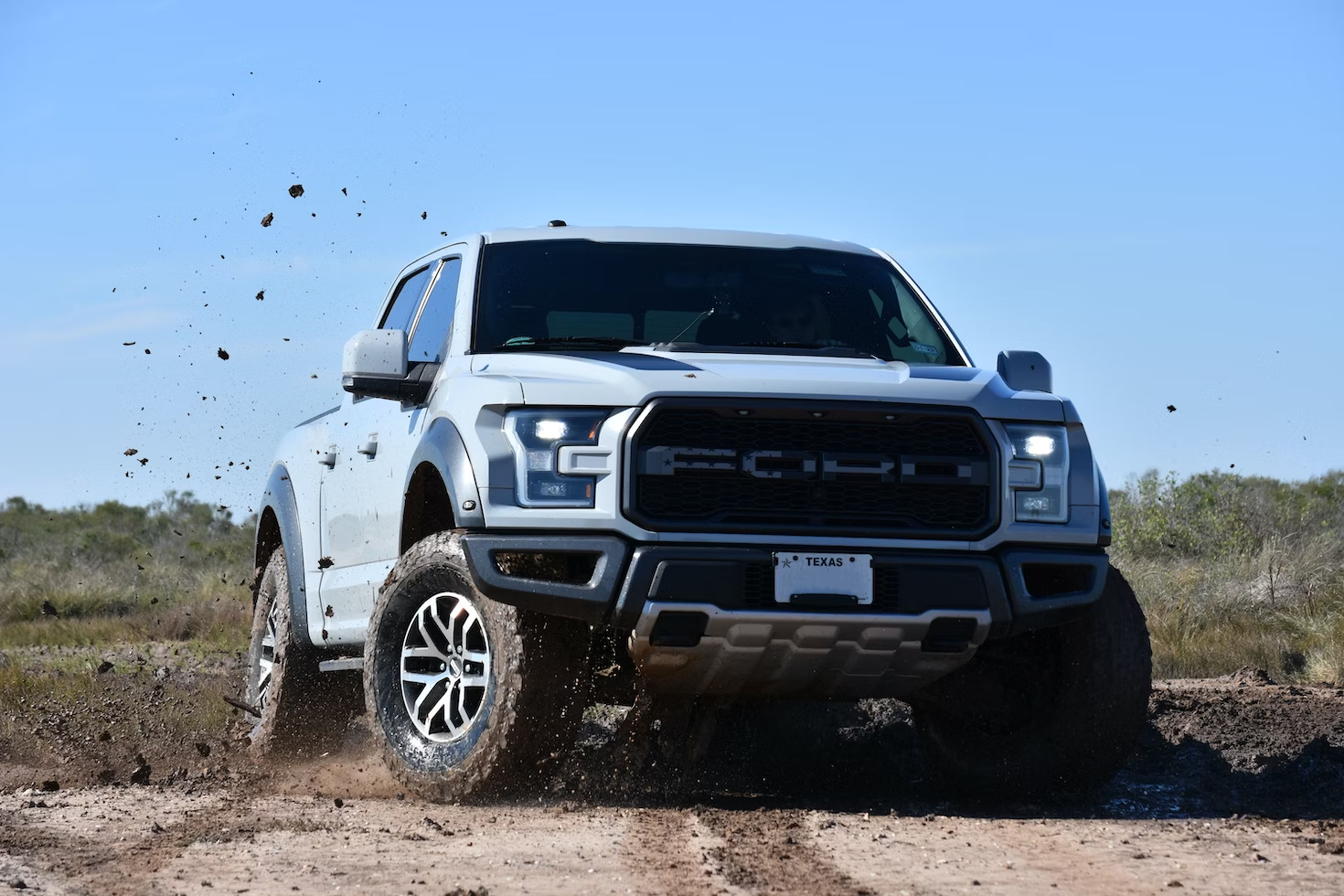
The true ascent of lifted trucks took flight in the 1970s. Even as major automobile manufacturers commenced the sale of off-road vehicles to the public, ardent off-road enthusiasts took matters into their own hands. Drivers in rural areas grappled with exceedingly challenging driving conditions, including deep bogs, colossal cliffs, seemingly boundless mud pits, and boulders. They sought more than the latest factory model available at their local dealerships.
These enthusiasts embarked on personalizing their trucks, fabricating DIY lift kits at home, and elevating the suspension according to their vision. Custom tires were then sourced to facilitate wilderness navigation.
Before venturing into the wilderness, these drivers conducted thorough safety checks to ensure their custom vehicles were primed for the wild. They often congregated to put their modified vehicles through their paces. As this burgeoning off-road culture gained momentum, more enthusiasts joined in these gatherings. The lifts continued to grow, and the first monster truck emerged in the 1970s.
Bob Chandler, an off-road racing enthusiast, frequently subjected his Ford F-250 to significant wear and tear. Regrettably, many Midwest automotive shops didn't stock the necessary replacement parts for his 4x4. To resolve this issue, he established the Midwest Four Wheel Drive and Performance Center, a shop in Ferguson, Missouri. In his quest for more business, Chandler undertook an ambitious project, elevating the vehicle's tires from 48 inches to a colossal 66 inches.
Chandler christened his creation "Bigfoot" and parked the colossal, attention-grabbing vehicle outside his store to attract customers. Word of this giant truck rapidly spread, propelling Chandler into national fame. Bigfoot even secured a cameo appearance in the film "Take This Job and Shove It." However, Chandler's ambition didn't end there.
In the early 1980s, Chandler aligned two dilapidated cars side by side in a field. He rigged up a tape recorder and filmed himself driving Bigfoot over these cars, utterly crushing them. Chandler harnessed this video as a marketing tool for his business, and it took off virally. Truck enthusiasts nationwide began conceiving their ideas.
In short order, other truck owners followed in Chandler's footsteps, with many striving to outdo one another in terms of size. Home videos proliferated during this period, and drivers couldn't resist filming themselves executing daring stunts, including jumps, burnouts, and high-speed races. The monster truck industry swiftly came to life, hosting events worldwide.
The Road to Mainstream Acceptance
As an increasing number of drivers embraced lifted trucks, automotive companies started offering these accessories. By the 1990s, the monster truck had become a household name. The automotive industry, in turn, became progressively amenable to the idea of lifted trucks. Factory-lifted trucks became increasingly prevalent during the 1980s and 1990s. Some companies even began offering their lift kits, streamlining the customization process for drivers everywhere.
With the surge in lifted trucks serving a multitude of purposes, the industry began studying how lift kits influenced these vehicles' drivability. Manufacturers continued honing the art of lifting, integrating new shocks and steering components to enhance driver control. Lift enthusiasts eagerly exchanged insights and best practices for perfecting the lifting process. Lift kit manufacturers eventually incorporated these techniques into their products.
During the 1990s and 2000s, the internet was still in its early stages, necessitating in-person gatherings among enthusiasts. Monster and off-road truck events soared in popularity, encompassing races and rock-climbing competitions. Some enthusiasts employed computer-aided design programs to craft custom parts, gaining a competitive edge in these events.
The automotive industry proved relatively slow in adapting to these shifts. Nonetheless, DIY enthusiasts consistently pushed the lifted truck industry in novel directions, prompting manufacturers to play catch-up. Some lifting techniques were purely for spectacle, but others had practical implications, facilitating trouble-free traversal of challenging terrains.
Lifted Trucks in the Digital Age
Today, the internet has galvanized lifted truck enthusiasts, strengthening their community. New DIY forums and social media groups continually emerge, facilitating the exchange of insights and tips among truck owners worldwide. This robust sense of community has led to an upsurge in lifted truck events and competitions, generating increased attention for this burgeoning niche within the automotive industry.
Consumers now have more lift kit options than ever before. Independent lift kit manufacturers have been crafting their products for years, fostering a dedicated customer base in the process. The latest kits are more user-friendly, enabling virtually anyone to lift their truck without professional assistance.
As these kits have become simpler to use, and manufacturers have refined their products, more drivers are investing in lift kits. Modern kits are engineered to minimize steering and stability issues, assuaging concerns about radically altering a truck's road handling capabilities. The aftermarket suspension industry continues to thrive year after year, courtesy of superior products hitting the market.
The Contemporary Landscape
From the early days of the Kegresse track to the era of WWII's lifted vehicles, lifted trucks have traversed a fascinating path of evolution. They have progressed from their utility in off-road conditions to becoming a prominent feature in the mainstream truck market. Today, lifted trucks are emblematic of adventure and exploration, allowing drivers to tackle an array of terrains with unwavering confidence.
The journey of lifted trucks is a testament to human innovation and a reflection of our enduring quest to conquer new frontiers. So, as you behold a lifted truck rumbling down the road or proudly perched in a parking lot, remember that beneath its towering presence lies a rich history, a tale of triumph over rough terrains and an enduring symbol of individuality and adventurous spirit.