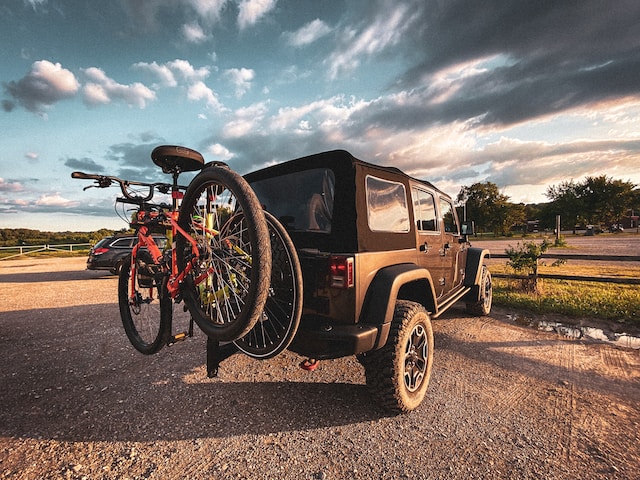
As bike parks and forest trail centers open their doors, the question arises: How can you transport your bike safely and securely on or in your car? Let's delve into various options, examining the advantages and drawbacks of each. It's crucial to adhere to safety guidelines, including weight limits and proper installation, regardless of the method chosen.
1. Inside the Car
Pros: Secure, No impact on fuel consumption
Cons: Risk of dirt and damage to the car interior, Potential inconvenience
For those with spacious cars, loading bikes inside is a cost-effective and secure solution. Most estates or SUVs can accommodate a bike with its front wheel removed. While this method ensures security and doesn't affect fuel consumption, it may pose challenges in keeping the car interior clean and can be cumbersome.
2. Clip-on Bike Rack
Pros: Affordable, Compatible with most car shapes
Cons: Inconvenient to use, Risk of damage to bikes and cars
Clip-on racks, though budget-friendly and versatile, come with their set of challenges. While they can be adjusted to fit various car shapes, loading multiple bikes may risk damage due to pedals and handlebars banging against the car. Safety measures, such as adding lights and a number plate, may be necessary for legal compliance.
3. Tow-Bar Bike Rack
Pros: Suitable for families, Protects both car and bikes
Cons: Expensive to purchase and fit, Not universally compatible with all cars
Ideal for families, tow-bar racks offer increased weight capacity and keep bikes separate from each other and the car. While they are pricier, their advantages include easy loading, reduced impact on fuel consumption, and the option to remove them when not in use.
4. Roof Rack

Pros: Quick and easy to load, Compatible with most cars
Cons: Increased drag, noise, and fuel consumption, Challenges with car parks having height restrictions
Roof racks strike a balance between security and affordability. While they are compatible with a wide range of cars and easy to remove, the added drag can impact fuel efficiency. Height restrictions in some car parks may also pose challenges.
5. Suction Mounts

Pros: Fits nearly any car, No need for permanent fixings
Cons: Expensive, Not suitable for multiple bikes
Suction mounts, a recent innovation, provide flexibility and compatibility with various cars. However, the cost and limitations in carrying multiple bikes may deter some users.
6. Tailgate Rack
Pros: Secure and easy to use, Folds away when not in use
Cons: Only fits vans and campers, Relatively expensive
Tailgate racks, commonly seen on camper vans, offer security and ease of use. However, they are limited to specific vehicle types and come with a higher price tag.
7. Pick-Up Tailgate Pad
Pros: Super convenient and easy to use, Aesthetic appeal
Cons: Only works on pick-ups, Limited security features
Ideal for pick-up trucks, tailgate pads offer a stylish and practical solution. However, their usage is limited to pick-up trucks, and security concerns should be considered.
8. Van
Pros: Interior space for people and gear, Flexibility in usage
Cons: Expensive, Bulky when not carrying bikes
Vans, despite their cost, provide ample space for people and equipment. Popular among outdoor enthusiasts, vans offer flexibility but may be excessive for daily use.
In the quest to transport bikes conveniently, enthusiasts must weigh the pros and cons of each method. Whether opting for simplicity, security, or style, finding the right solution ensures a seamless and enjoyable biking experience.